18650 Battery Packs, Built to Order
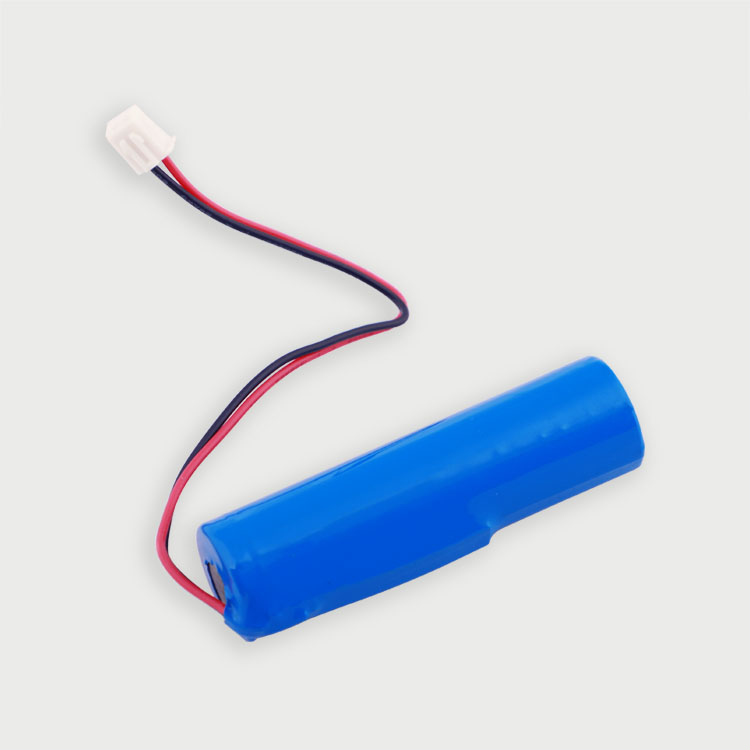
18650 packs built to order
An 18650 battery pack is specified from your device's voltage, capacity and space, then assembled from cells and a protection board matched to that configuration. We build packs from a single protected cell up to 48V-class strings, with each design documented before production. Tell us the load profile and enclosure limits, and the specification is written around them.
18650 pack configurations we build
Series count sets the pack voltage and parallel count sets capacity. Our documentation covers the full span. At the bottom, 1S1P button-top packs run at 3.6V with capacities from 2.2Ah to 3.4Ah depending on the cell fitted, with a protection board on the pack. Two-series designs sit in the 7.4V class, including a 6.4Ah industrial pack. Three-series designs cover the 11.1V class: a 5.2Ah 3S2P industrial pack, a 10Ah patient-monitor pack and a 2.6Ah sickbed pack are all documented.
Above that, higher-series designs serve 24V, 36V (10S) and 48V (13S/14S) equipment. The same rules apply at every level: series and parallel counts are checked against your current profile and the physical space before the specification is written. If your device needs a format outside these classes, the configuration is still derived the same way, from the electrical requirement first.
For equipment that needs more capacity per cell, 21700 battery packs follow the same build process in a larger cell format.
Cells and grades: how cell choice changes capacity and discharge
The 18650 format is fixed; what changes between packs is the cell inside it. Capacity and discharge behaviour both come from the cell, so cell choice is a design decision, not a purchasing detail. A higher-capacity cell gives more runtime from the same parallel count, while a cell built for higher discharge delivers more current, usually at some cost in capacity per cell.
Cells can be selected from established cell makers. Our published cell sourcing list includes Panasonic, Samsung, LG, Molicel, Murata, EVE and BAK for lithium-ion, and EVE and Great Power for LiFePO4. Naming a cell brand describes cell sourcing options only, not a partnership or agency.
Cell grade matters as much as brand. Starting from the required runtime, continuous discharge current and peak load, we select the cell and grade that meet all three, then set the parallel count to reach the target capacity. When a LiFePO4 chemistry suits the application, the same selection process applies within that list. If you already work to a preferred cell, say so at enquiry and the pack is specified around it.
Protection and BMS on 18650 packs
Every 18650 pack is fitted with a protection board or BMS matched to its configuration. The protection circuit is not an optional add-on: it is chosen together with the series and parallel counts, so the overcharge, over-discharge, overcurrent and short-circuit limits line up with the cells and the load.
For a small 1S1P pack, the board sits on the pack and protects a single cell group. As series count rises, the BMS manages more cell groups and the balancing and cutoff behaviour is set for that string. A 48V (13S/14S) pack therefore carries a different board from a 3S pack, and the specification records which one. This is what an 18650 battery pack with BMS means in practice: the board is part of the design from the start, not fitted afterwards.
BMS functions are confirmed in the project specification. Not every model carries every option, so the feature set for your pack is agreed in writing before production.
Documented examples from the range
The specification library holds builds across the voltage classes. The 1S1P button-top pack with protection board covers 3.6V at 2.2Ah to 3.4Ah. The 7.4V-class 6.4Ah industrial pack serves two-series equipment. In the 11.1V class, the 5.2Ah 3S2P industrial pack, the 10Ah patient-monitor pack and the 2.6Ah sickbed pack show how one voltage class supports different capacity and current needs. Higher-series designs cover 24V, 36V (10S) and 48V (13S/14S) equipment.
Two of these are documented as standard references: the 3.6V 2.2Ah 18650 pack and the 11.1V 5.2Ah 18650 pack. Reviewing a documented build close to your requirement is the fastest way to settle a specification. If the closest match still differs from your device, the same platform is adapted rather than starting from nothing — our range of custom lithium ion packs is built on these documented designs.
UN38.3, IEC 62133 and MSDS documents can be confirmed and provided for specific models — tell us the model you are buying and we will confirm which documents cover it.
To start a specification, quote an 18650 pack with your voltage, capacity, load profile and space limits.
Frequently Asked Questions
Which cell brands and grades do you use for 18650 packs?
Our published cell sourcing list includes Panasonic, Samsung, LG, Molicel, Murata, EVE and BAK for lithium-ion, and EVE and Great Power for LiFePO4. Naming a cell brand describes cell sourcing options only, not a partnership or agency. Grade is selected against your runtime, continuous discharge current and peak load, and the chosen cell and grade are recorded in the project specification.
Can 18650 packs be built in 1S to 14S configurations?
Yes. Documented builds run from 1S1P button-top packs at 3.6V through 2S (7.4V class) and 3S (11.1V class) designs to higher-series packs for 24V, 36V (10S) and 48V (13S/14S) equipment. Series count sets voltage and parallel count sets capacity; both are checked against your current profile and available space before the specification is written.
Do you offer button-top 1S1P packs with protection board?
Yes. The 1S1P button-top pack with protection board is a documented build, at 3.6V with capacity from 2.2Ah to 3.4Ah depending on the cell fitted. The protection board is matched to the single-cell configuration, and its functions are confirmed in the project specification before production, since not every model carries every option.
Tell us about your battery project
Send your device requirements — voltage, capacity, current, space and quantity — and our engineering team will evaluate cell selection, configuration and battery management against them.