Custom Battery Packs Built to Your Specification
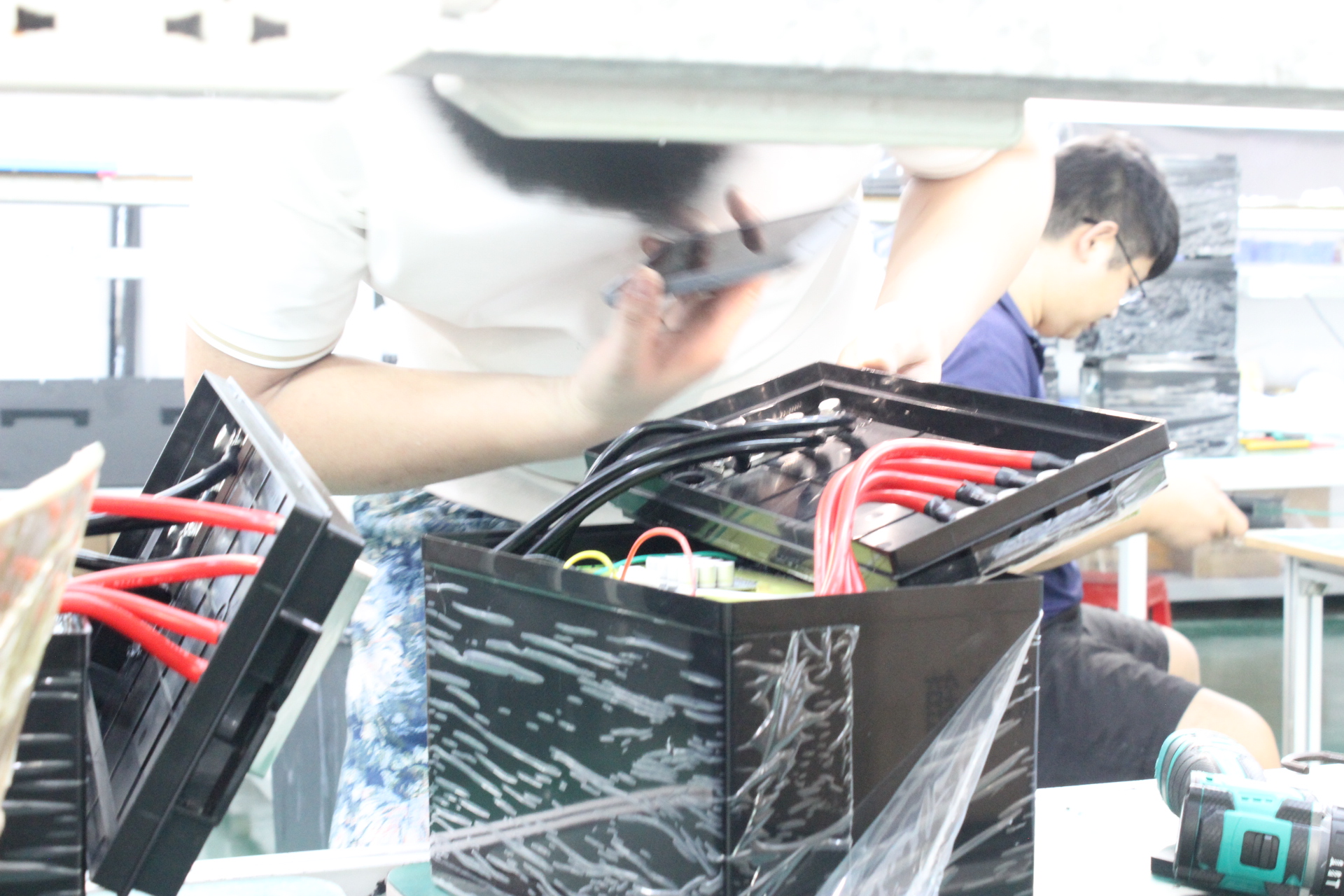
What 'custom' covers: chemistry, voltage, capacity, BMS, enclosure, leads and connectors
A custom battery pack is defined by your device, not by a catalogue. The chemistry sets the voltage behaviour and energy density; the series and parallel arrangement sets pack voltage and capacity; the protection and management circuitry sets how the pack behaves under charge, discharge and fault conditions. Enclosure, leads and connectors then make the pack fit the product and the assembly line.
Every one of these decisions is open on a custom program. Cell selection can favour energy density, power delivery, temperature behaviour or cost. Voltage and capacity come from the series/parallel count, which is checked against your current profile and the physical space before a specification is written. The custom battery case can be a soft-pack structure, a heat-shrink covering or an injection-molded housing. Leads, connectors and communication interfaces are specified to match what your device expects.
Options are evaluated per project and confirmed in the specification. Not every model carries every option, so the confirmed drawing — not a generic datasheet — is what production is built against.
Chemistries and formats we build
Custom lithium ion battery packs and custom LiFePO4 battery packs are the two main lines. Lithium-ion covers the widest range of device requirements; LiFePO4 suits applications where chemistry-level stability and a long service life matter more than the smallest possible volume.
Polymer (LiPo) packs serve products that need a thin, shaped cell format. Primary and coin cells cover low-drain functions, memory backup and small devices where recharging is not part of the design. For equipment already in service, custom NiMH battery packs and custom NiCd battery packs can be discussed as drop-in replacements, so existing hardware keeps working without a redesign.
The chemistry decision drives everything downstream — protection thresholds, thermal behaviour, enclosure material and documentation. If you are unsure which chemistry fits, describe the device and the operating conditions and we will evaluate the options against it. Detailed capability for each line is set out on the custom lithium ion battery packs and custom LiFePO4 battery packs pages.
How a custom battery pack project runs
Custom built battery packs move through five stages, and each stage ends with something you can review.
- 1. Requirements. You submit the device, application, available space, voltage, capacity, current, environment and target-market requirements. This is the input that shapes everything else.
- 2. Evaluation. Cell selection, series/parallel configuration, protection and management circuitry, structure and communication options are evaluated together — a change in one area affects the others.
- 3. Sampling. Samples are developed only after the specification and drawings are confirmed, so the sample represents what production will build.
- 4. Verification. Samples are tested against the agreed test items, and the documentation needed for your target market is checked at the same time.
- 5. Production. Production, packaging, quantities, delivery and acceptance conditions are confirmed before the line starts.
If you want the configuration work handled as a defined engineering task, the battery pack design service covers it. To put your requirements in front of the team, start a custom pack project with the device details and space constraints.
Design inputs that speed up quoting
The fastest quotations come from complete inputs. The most useful package includes the device and how it is used, the space available for the pack (including mounting and cable routing), the voltage and capacity you need, the current profile in both directions, the operating environment, and the target market — because market requirements determine which documentation is needed.
Protection and management requirements belong in the same package. Tell us whether you need charge/discharge management, SOC/SOH monitoring, or a communication interface such as Bluetooth, WiFi, CAN bus or RS485. Enclosure preference — soft pack, heat-shrink or injection-molded — and connector types also shorten the evaluation stage.
Missing inputs are not a blocker; they become questions during evaluation. But each one that arrives with the enquiry is one less round of clarification before sampling. That is the practical difference between a quotation in days and a specification stuck in email.
Frequently Asked Questions
What chemistries can be customized besides lithium-ion?
LiFePO4 is the other main line, used where chemistry-level stability and long service life matter more than minimum volume. Polymer (LiPo) packs cover thin and shaped formats, and primary and coin cells serve low-drain or backup functions. For equipment already in service, custom NiMH and NiCd replacement packs can be discussed so existing hardware keeps working. The chemistry is selected against your device, current profile and environment.
What is the MOQ for a custom battery pack?
Minimum order quantities depend on the cell type and the pack configuration, and are confirmed with the quotation. A soft-pack build and an injection-molded housing have different setup economics, and the cell selected affects the minimum as well. Give us the configuration and the annual or per-order quantity you expect, and the minimum will be stated in the quote rather than in a general rule.
How long does a custom pack project usually take?
Custom production usually takes 1–2 months, counted from confirmed specification and drawings. Items held in stock ship without waiting for production; the lead time applies to custom production and excludes stock items. Sampling and verification sit ahead of that window, so the completeness of your design inputs is the main variable you control.
Tell us about your battery project
Send your device requirements — voltage, capacity, current, space and quantity — and our engineering team will evaluate cell selection, configuration and battery management against them.