Battery Pack Manufacturer in Shenzhen, China
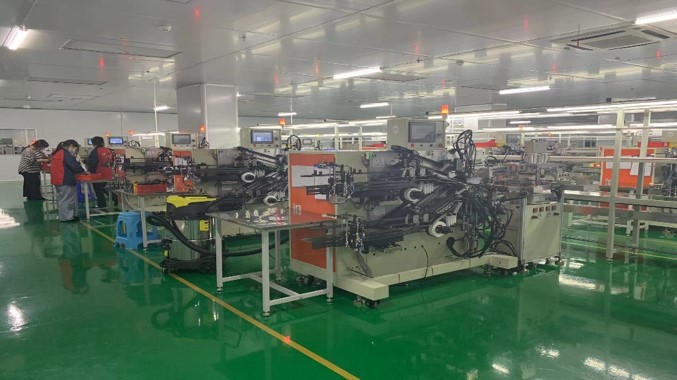
What the factory makes: four product lines
Jetray Technology is a battery pack manufacturer in Shenzhen, China, building packs to a customer's specification rather than selling from a stock list. A pack starts from your device, not from a catalogue: your load profile, space and target market set the voltage, capacity and current limits before any cell is chosen. Supply is project-based and B2B, not retail — there is no consumer checkout on this site.
Four product lines cover most enquiries. Custom lithium battery packs are built around a device envelope, with series and parallel configuration confirmed against the current profile. Li-ion packs cover the common cell chemistries and form factors for portable equipment. LiFePO4 packs serve applications where chemistry stability is the deciding factor rather than energy density. Battery management systems are selected or configured to match each pack's voltage class and current limits.
The range of custom battery packs covers sealed enclosures, connector selection and BMS integration. Because each project is specified individually, configuration names such as 3S2P or a 48V class are working descriptions, not off-the-shelf catalogue numbers.
How a project starts
A project starts with your application, not with a quote. Send the device or application, the space available for the pack, the required voltage, capacity and current, the operating environment, and the target market. That set is what the engineering team evaluates first, because each item constrains the others — a voltage requirement fixes the series count, a space limit fixes the cell format, and a target market decides which documents the pack will need.
Evaluation follows five project steps, from initial requirement review through specification, prototype, validation and production. You are not asked to commit to a production volume at the first contact; the point of the early steps is to establish whether the pack can be built inside your envelope at all.
To begin, contact the factory with the list above. If you are comparing several lithium battery pack manufacturers, the practical test is how precisely each one responds to those six items — a supplier who quotes before asking about the load profile is guessing.
Certifications and quality system
The company holds ISO 9001 and ISO 14001 certification and is recognised as a National High-Tech Enterprise. It also holds multiple utility model patents covering pack and BMS design work. These sit behind the production process rather than beside it: the quality system defines how incoming cells, assembly and outgoing packs are checked, and the environmental system covers how the plant handles materials and waste.
Product documentation is confirmed per model. UN38.3, IEC 62133 and MSDS documents can be confirmed and provided for specific models — tell us the model you are buying and we will confirm which documents cover it. This matters when the same factory builds several configurations: a document set that covers one pack does not automatically cover another.
The quality and certifications page sets out how the system and the product documents fit together. If your market has its own approval route, state it at the start of the project so it can be designed in rather than added later.
OEM and ODM support
OEM and ODM work are both supported. Under OEM, you bring the specification and the pack is built to it, with your labelling and packaging requirements handled in production. Under ODM, the factory takes a larger share of the design work — enclosure, BMS configuration and connector layout — and develops the pack against your device requirements and target market.
For buyers sourcing from lithium ion battery pack manufacturers, the useful question is where the boundary sits between your design responsibility and the factory's. That boundary is fixed in the project specification, together with the options selected for the build. Options are confirmed in the project specification; not every model carries every option.
Both routes use the same five project steps, so a custom battery pack manufacturer's evaluation process does not change with the label on the finished pack. To see how the company is organised, read about Jetray Technology.
Frequently Asked Questions
How do we start a project with your factory?
Send your device or application, the space available for the pack, the required voltage, capacity and current, the operating environment, and the target market. The team evaluates that set through five project steps, beginning with a requirement review. There is no need for a finished specification at the first contact — part of the evaluation is working out whether the pack fits your envelope. Use contact the factory to send the details.
What certifications does the company hold?
The company is ISO 9001 and ISO 14001 certified, is recognised as a National High-Tech Enterprise, and holds multiple utility model patents. For product documentation, UN38.3, IEC 62133 and MSDS documents can be confirmed and provided for specific models — tell us the model you are buying and we will confirm which documents cover it. Documentation is confirmed per model, so check the exact configuration on your order.
Can you support OEM and ODM orders?
Yes. OEM orders are built to your specification, with labelling and packaging handled in production. ODM orders give the factory a larger design role across enclosure, BMS configuration and connector layout, developed against your device requirements and target market. In both cases the division of design responsibility is written into the project specification, and options are confirmed there rather than assumed for every model.
Tell us about your battery project
Send your device requirements — voltage, capacity, current, space and quantity — and our engineering team will evaluate cell selection, configuration and battery management against them.