Lead Acid Replacement Batteries (Lithium)
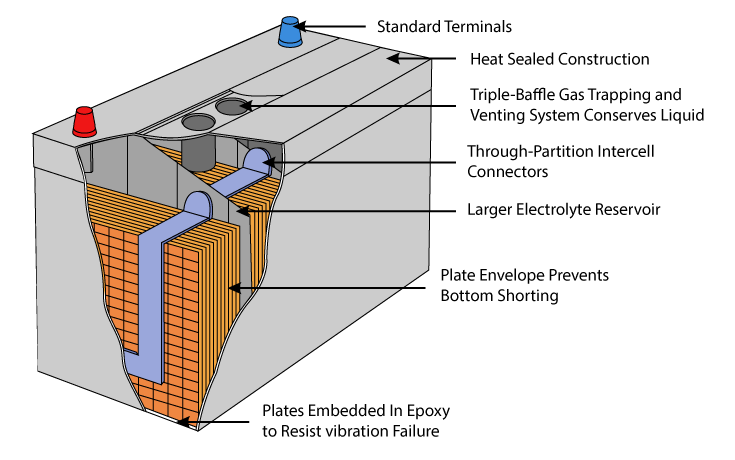
When replacing lead-acid makes sense
A lead acid replacement battery is worth considering when the equipment itself is still sound but the battery bank has become the weak point. Golf carts, storage cabinets, backup systems and industrial equipment are often built around lead-acid packs, and the rest of the machine — motor, controller, wiring, enclosure — may have years of service left. Swapping the bank for LiFePO4 units in the documented 12V/24V range lets you keep the equipment and change only the energy storage.
The decision usually comes down to how the pack is used. Applications that discharge deeply and recharge daily put more stress on lead-acid banks, while equipment that sits idle benefits from a chemistry that does not need the same attention. In both cases the replacement starts from the compartment you already have, not from a catalogue. Our LiFePO4 batteries are built in 100Ah–200Ah classes with PVC and steel cases, which covers most of the lead acid replacement lithium battery requests we see for golf carts, storage, backup and industrial equipment.
Drop-in fit: dimensions, terminals, system voltage
Most replacements start by matching three things: compartment dimensions, terminal position and system voltage. Measure the space the lead-acid bank occupies, note where the terminals sit and which way the cables run, and confirm the system voltage the equipment expects. Those three inputs decide whether a lithium battery replacement for lead acid is mechanically and electrically viable before any specification is written.
System voltage is set by series count, capacity by parallel count, and both are checked against your current profile and the physical space. A 12V or 24V class unit must line up with the equipment's charging and discharge window, and the case must sit securely without adapters that could shift under vibration. Exact drop-in fit is confirmed per model — a unit in the right voltage class can still differ in terminal layout or case footprint. Sharing compartment photos and cable routing with us is the fastest way to check a replacement fit before you commit to a model.
Charger compatibility — the check that matters
A lead-acid charger may not suit lithium charging profiles. Lead-acid charging is built around the behaviour of that chemistry, and a lithium replacement asks for a different charge regime. The charger is therefore part of the replacement decision, not an afterthought — a pack that fits the compartment but is fed by a mismatched charger will not deliver the service life the chemistry allows.
Charger compatibility is checked per project. Tell us the charger model, its output voltage and how the equipment controls charging, and we will confirm whether it suits the lithium unit under consideration. Where it does not, a matched charger can be supplied with the pack. This is also where documentation matters: UN38.3, IEC 62133 and MSDS documents can be confirmed and provided for specific models. Tell us the model you are buying and we will confirm which documents cover it.
Weight and maintenance differences
Lithium replacements are substantially lighter than the lead-acid bank they replace. That difference is felt across the whole machine: easier handling during installation, less load on the chassis and, in golf carts, less weight to move on every run. The exact figure depends on the model, so we confirm it per configuration rather than quoting a generic saving.
Maintenance also changes character. A lead-acid bank needs watering and terminal care as part of routine service; a LiFePO4 unit does not. For fleets and backup installations, that shifts the service schedule from battery upkeep to periodic inspection of connections and charging. The replacement does not remove maintenance entirely — terminals, cabling and charger behaviour still deserve checks — but it removes the routine fluid and terminal work that lead-acid demands. For golf cart fleets specifically, our golf cart lithium batteries page covers the fit and charger questions that come up most often. Where a 200Ah class unit suits the compartment and the duty cycle, the 12V 200Ah LiFePO4 battery is a common starting point for these projects.
Frequently Asked Questions
Can a LiFePO4 pack drop into our existing lead-acid compartment?
Most replacements start by matching compartment dimensions, terminal position and system voltage, and LiFePO4 units in the documented 12V/24V range are built in 100Ah–200Ah classes with PVC and steel cases for exactly this purpose. Exact drop-in fit is confirmed per model, because a unit in the right voltage class can still differ in case footprint or terminal layout. Send the compartment measurements and cable routing and we will confirm which model fits.
Will our lead-acid charger work with a lithium replacement?
A lead-acid charger may not suit lithium charging profiles, so compatibility is checked per project rather than assumed. Tell us the charger model, its output voltage and how charging is controlled, and we will confirm whether it suits the lithium unit you are considering. Where it does not, a matched charger can be supplied with the pack. This check is part of every replacement project we quote.
How much weight can we save by switching?
Lithium replacements are substantially lighter than the lead-acid bank they replace, and the saving is felt in handling, chassis load and, on golf carts, in what the machine has to move on every run. We do not quote a generic percentage because the figure depends on the specific model and the bank it replaces. The weight difference for your configuration is confirmed with the model specification.
Tell us about your battery project
Send your device requirements — voltage, capacity, current, space and quantity — and our engineering team will evaluate cell selection, configuration and battery management against them.