Energy Storage Batteries
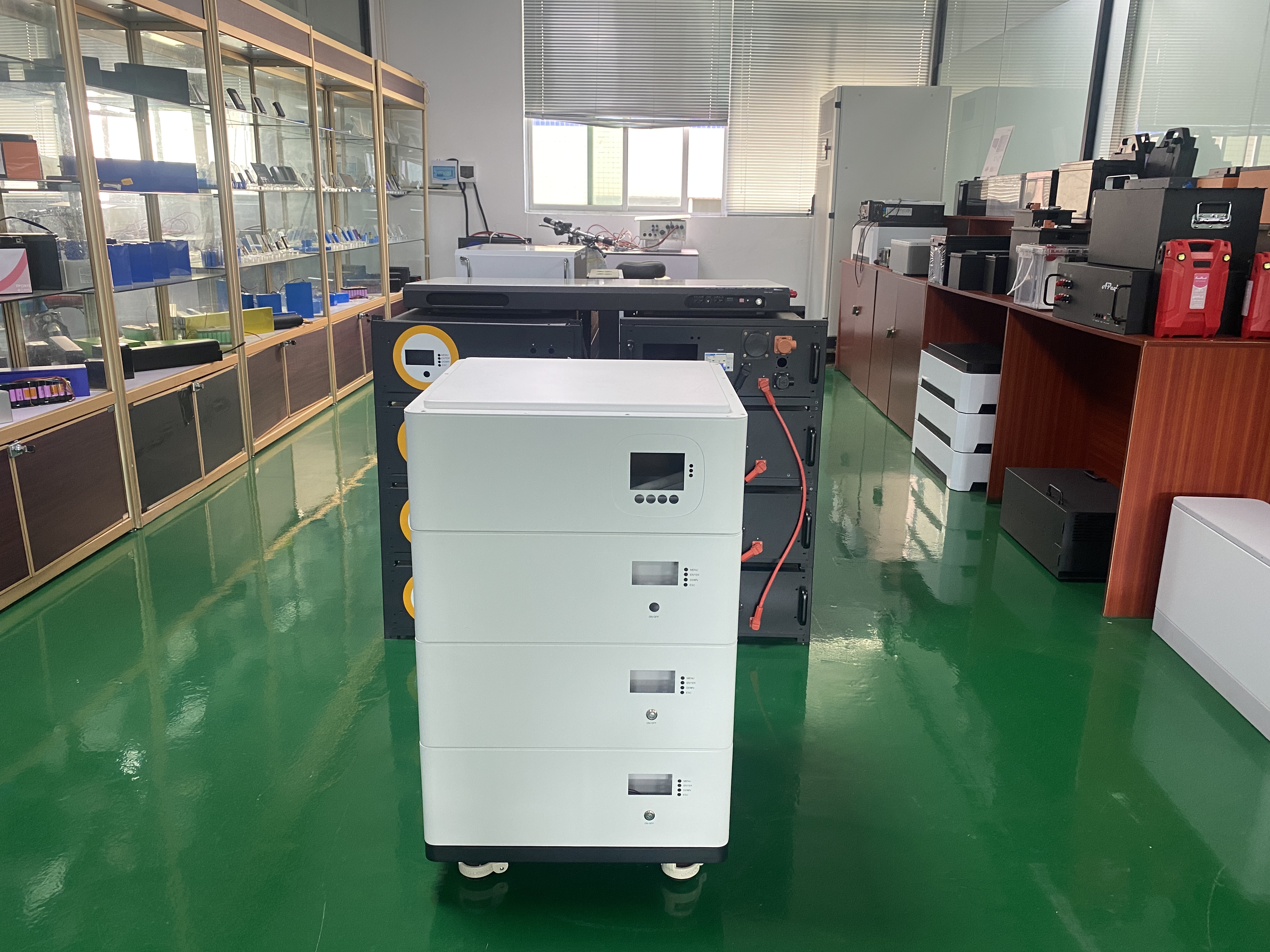
Storage formats: wall-mounted, rack-style and battery banks
An energy storage battery is specified from the installation site inward: available wall or floor space, how the pack will be serviced, and how the inverter will be reached. The same 51.2V cells can be built into different formats, and the format decides how the system is installed and expanded. We document storage units in wall-mounted and rack-style formats so the mechanical design matches the room, not the other way round.
Wall-mounted units hang on the wall and keep the floor clear, which suits a garage, utility room or plant room where space is tight. Rack-style units slide into a standard cabinet, so a larger lithium ion battery bank can grow unit by unit inside a single enclosure. For a lithium battery bank for home use, the choice usually comes down to whether the homeowner wants a compact wall box or a cabinet that can be extended later.
A custom battery bank can also be built as a floor-standing assembly where neither format fits. The enclosure, terminal arrangement and mounting points are set in the specification, so tell us the space you have and how the pack will be lifted and serviced. A home battery storage system is a long-term fixture, and the format should make future service straightforward rather than block it.
Capacity building blocks: 51.2V units and 12V/24V LiFePO4
The documented storage range centres on 51.2V energy storage units at 100Ah, 200Ah and 300Ah — 5.12, 10.24 and 15.36 kWh respectively. These are the building blocks for a 48v lithium battery bank: the 51.2V nominal class is the common storage voltage, and the three capacities let a project start at the size it needs today. Which of the three fits depends on daily consumption and the inverter's operating window.
Smaller 12V and 24V LiFePO4 units serve as smaller building blocks. They suit compact solar battery storage, remote equipment and lower-voltage loads, and they can be combined where the system architecture calls for it. Where a project needs a modest, self-contained pack, our 12V LiFePO4 batteries page covers that range in more detail.
The capacity decision is not just a sum of loads. Charge and discharge current, depth of discharge in daily cycling, and the space reserved for the pack all shape the choice between a single 100Ah unit and a larger 300Ah unit. A 48v battery bank built from 51.2V units keeps the voltage class fixed while capacity scales with the units selected.
Combining units for larger systems
Larger systems are assembled by combining units. A large lithium battery bank is not a different product line; it is a documented unit repeated in a configuration the model supports. Which combinations a model supports is confirmed per model, so the parallel arrangement is written into the specification rather than assumed at the installation stage.
Combining units brings practical questions: how the units share current, how the busbars and cabling are sized, and how the system is serviced if one unit needs attention. These are settled during specification, when the site layout and the load profile are both known. For a solar battery storage project, the array size and the expected daily cycle set the target capacity, and the unit count follows from it.
If you are weighing a single large unit against several smaller ones, our wall-mounted lithium battery page shows how the wall format is built. For projects where the storage sits alongside generation, solar energy storage covers the application side. Both routes end in the same place: a written specification that states the units, the format and the connections.
Inverter communication and monitoring
An energy storage battery has to talk to the inverter, and the protocol is decided per project. CAN bus and RS485 options are evaluated per project and confirmed in the specification. The inverter make and model, the site's monitoring setup and the commissioning routine all affect which option is right, so the protocol is matched to the equipment rather than fixed in advance.
Bluetooth monitoring appears on the documented storage model sheet as an optional protocol. It gives local access to the battery's status during commissioning and service, and it is confirmed as an option in the same way as the wired protocols. Options are confirmed in the project specification; not every model carries every option.
Documentation follows the same per-model logic. UN38.3, IEC 62133 and MSDS documents can be confirmed and provided for specific models — tell us the model you are buying and we will confirm which documents cover it. The company holds ISO 9001 and ISO 14001 certification and National High-Tech Enterprise status, and holds multiple utility model patents.
Frequently Asked Questions
What capacities can be combined for larger storage systems?
The documented 51.2V units are 100Ah, 200Ah and 300Ah — 5.12, 10.24 and 15.36 kWh. Larger systems are assembled by combining units, with 12V and 24V LiFePO4 units available as smaller building blocks. Which combinations a model supports is confirmed per model, so the target capacity and the permitted configuration are agreed in the specification before the order is placed.
Can storage batteries be connected in parallel?
Parallel connection is how larger capacity is assembled from documented units, and the permitted combinations are confirmed per model. The parallel arrangement, cabling and service access are written into the project specification. Because the supported configuration differs between models, tell us the capacity you need and the model you are considering, and we will confirm the arrangement that model supports.
What inverter communication options are available?
CAN bus and RS485 options are evaluated per project and confirmed in the specification, based on the inverter make and model and the site's monitoring setup. Bluetooth monitoring appears on the documented storage model sheet as an optional protocol. Because options vary by model, the communication method is fixed in the specification rather than assumed from a catalogue.
Ready to size a bank for a specific site? plan a storage system with your load profile, space and inverter details, and we will confirm the format, capacity and communication options in writing.
Tell us about your battery project
Send your device requirements — voltage, capacity, current, space and quantity — and our engineering team will evaluate cell selection, configuration and battery management against them.